
Uncover the Real Costs of Fractional Ownership
- Mar 30
- 5 min read
For many frequent flyers, the allure of fractional ownership is presented as the ultimate middle ground between full aircraft ownership and traditional charter. The marketing materials often lead with a compelling, fixed hourly rate that suggests a level of cost-efficiency and guaranteed availability that is hard to ignore. However, when one looks beneath the surface of the glossy brochures provided by a leading provider of fractional ownership programs, the financial reality is often far more complex, and significantly more expensive, than the advertised headline figure.
If you are currently evaluating your private aviation options for 2026, understanding the "true cost" of these programs is essential. While a major fractional operator may advertise an occupied hourly rate of $3,900, this figure represents only a fraction of the total capital outflow. To make an informed decision, you must account for acquisition costs, monthly management fees, and the most significant "silent tax" of all: asset depreciation.

The Financial Iceberg: Beyond the Hourly Rate
To understand why the advertised rates can be misleading, we must analyse the actual cost structure of a typical five-year agreement. Consider a scenario involving a 1/16th share of a popular Light or Super Light aircraft.
In this example, a leading provider may offer the following terms:
Acquisition Cost: $500,000
Agreement Term: 5 Years
Annual Flight Allowance: 50 Hours
Monthly Management Fee: $13,000
Occupied Hourly Rate: $3,900
At first glance, $3,900 per hour for a modern, well-maintained aircraft seems highly competitive. However, the management fee alone totals $156,000 per year, regardless of whether you fly a single minute. Over the five-year term, these fees amount to $780,000. When you distribute that cost across your 250 total flight hours (50 hours per year), the management fee adds a staggering $3,120 to every hour flown.

Depreciation: The Hourly Cost You Never See
Perhaps the most overlooked element in fractional ownership is the loss of capital value. Fractional shares typically experience significant depreciation, often ranging from 30% to 50% over a standard five-year contract. While major fractional operators offer a guaranteed buyback at the end of the term, that buyback is based on the fair market value at that time: not your initial purchase price.
If we assume a conservative 40% depreciation on a $500,000 share, you are effectively "spending" $200,000 in lost asset value over the life of the contract. When calculated on an hourly basis for a 50-hour-per-year flyer, depreciation accounts for an additional $800 per flight hour.
When we combine these elements, the "Real Rate" looks very different:
Cost Component | Total Cost (5 Years / 250 Hours) | Effective Cost Per Hour |
Advertised Flight Rate | $975,000 | $3,900 |
Monthly Management Fees | $780,000 | $3,120 |
Asset Depreciation (40%) | $200,000 | $800 |
Total True Cost | $1,955,000 | $7,820 |
In this reality, you are not flying for $3,900 per hour; you are flying for $7,820 per hour. This figure represents a 100% increase over the marketed rate, a discrepancy that many principals and family offices only fully realise after the contract is signed.
Omitted Charges: The Variable Factors
Even the "true cost" of $7,820 per hour may still be an underestimate. Most fractional programs include additional variable costs that are omitted from the primary cost breakdown.
Fuel Surcharges
Fuel prices are notoriously volatile. Most fractional contracts include a base fuel rate, with any excess passed directly to the owner via a fuel surcharge. In periods of geopolitical instability or high energy demand, these surcharges can add hundreds, if not thousands, of dollars to every flight hour.
Peak Airport Fees and International Surcharges
Operating into high-traffic hubs or during peak periods often incurs additional premiums. Furthermore, if your travel takes you across international borders, you may face 'High Density Airport Fees' or specific international handling charges that are not covered by the standard hourly rate. Unlike a bespoke charter through Jet Members, where these costs are transparently quoted upfront, fractional owners often see these as line-item additions on their monthly statements.

The Contractual Handcuffs: A Lack of Flexibility
Beyond the financial implications, the legal structure of fractional ownership is designed for long-term commitment rather than operational flexibility. A standard agreement typically spans five years. While there is often a provision for "early release," this usually only becomes available after the third year and may involve financial penalties or unfavourable buyback terms.
This lack of flexibility can be a significant drawback for business owners and high-net-worth individuals. If your travel requirements change; perhaps you no longer need 50 hours a year, or you suddenly require a larger aircraft for transatlantic missions, you remain tethered to the capital costs and management fees of your original share.
Furthermore, fractional owners lack the control afforded to full aircraft owners. You cannot benefit from charter revenue by making your aircraft available to third parties, nor do you have a say in who else uses "your" tail number or whether pets are permitted on board during other owners' legs.
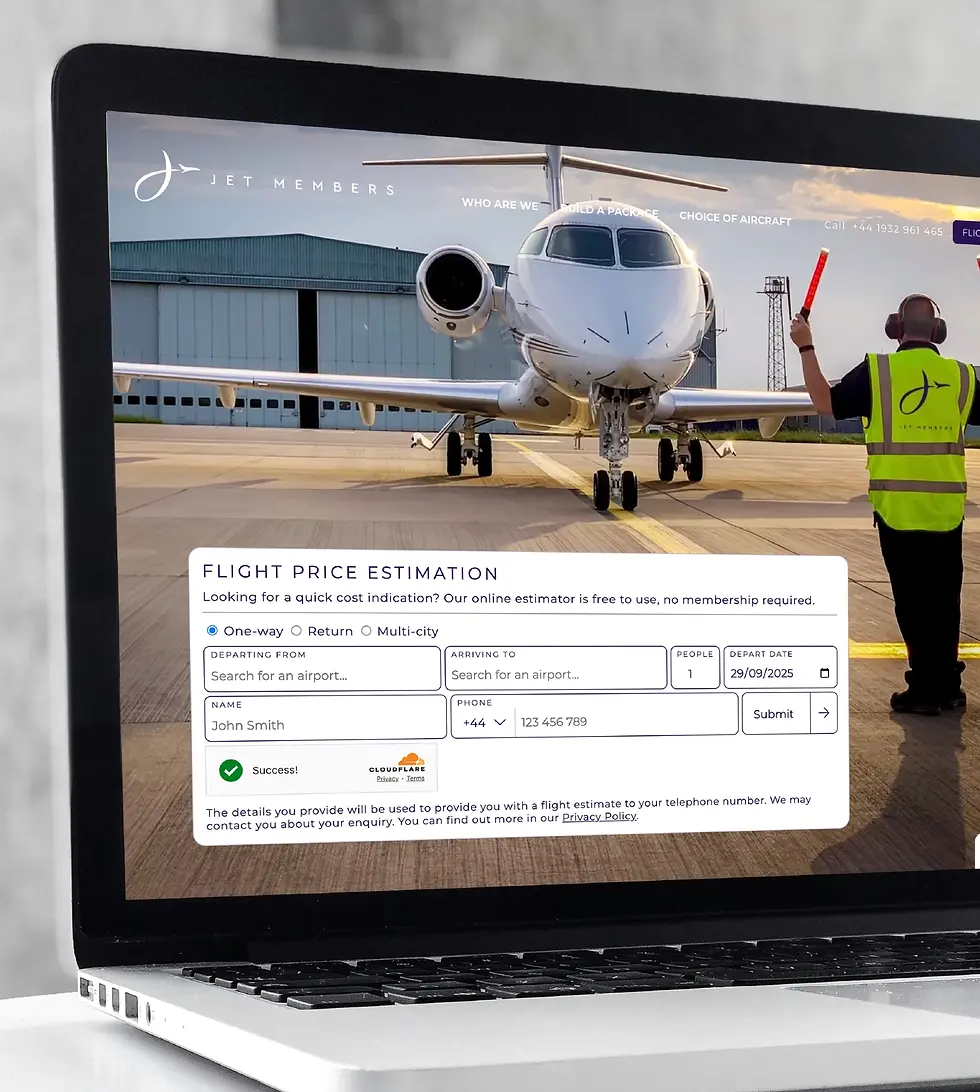
The Jet Members Alternative: Flexibility and Market Transparency
At Jet Members, we believe that private aviation should adapt to your life, not the other way around. Our approach is built on the pillars of flexibility, transparency and real-time market intelligence.
No Capital Risk or Hidden Depreciation
When you fly with us, your capital stays in your business or your investments. There is no $500,000 acquisition fee and, crucially, zero depreciation risk. You are not an asset owner; you are a service user who only pays when the wheels are turning.
Real-Time Market Pricing
The private jet market is dynamic. Fixed-rate programs often lock you into prices that do not reflect current market conditions. We provide real-time market pricing with integrated price protection. If the market dips, you benefit. If you need a Super Light Jet like the Citation XLS for a European hop, we source the best-positioned aircraft from our network of Argus Gold and Wyvern Approved operators.
Security and Ethical Standards
We understand that trust is the currency of our industry. This is why all client funds are held in dedicated trust accounts, ensuring your money is protected until the mission is complete. Additionally, as part of our commitment to the future of flight, we provide complimentary carbon offsetting for every flight, allowing you to meet your ESG goals without additional administrative burden.

Is Fractional Ownership Right For You?
Fractional ownership can make sense for those flying more than 100 hours per year on very consistent routes with a high need for guaranteed availability on short notice. However, for the majority of users flying 25 to 75 hours per year, the 'all-in' hourly cost of fractional ownership is difficult to justify when compared to the agility of a bespoke charter or a flexible membership.
Before committing to a five-year program with a major fractional operator, we encourage you to perform a full audit of the projected costs.
Ensure you are factoring in:
The hourly impact of the monthly management fee.
The anticipated depreciation of the asset over the term.
The cost of capital tied up in the acquisition.
Variable fuel and peak period surcharges.
If the prospect of doubling your advertised hourly rate and losing flexibility is unappealing, there is a better way to fly. Jet Members offers the consistency and safety standards of a fractional fleet with the financial efficiency and freedom of the open market.
To discuss a comparison between your current fractional program and a tailored Jet Members solution, or to learn more about the 2026 trends in private aviation, contact our flight desk today. We are here to ensure that when you take to the sky, the only thing you have to worry about is your destination, not the hidden costs of the journey.

Comments